L’essentiel à retenir :
Le storing toys repose sur des solutions adaptées comme les systèmes modulaires et les contenants transparents. Utiliser des rotations régulières permet de réduire le désordre tout en renouvelant l’intérêt des enfants. En moyenne, un cycle de 2 à 4 semaines favorise une gestion plus efficace des jouets et facilite leur rangement.
Il est courant de penser que le stockage des jouets nécessite beaucoup d’espace, alors que des options compactes et polyvalentes existent pour optimiser même les plus petits environnements. Exploiter les volumes verticaux et choisir des contenants avec des étiquettes visuelles améliorent la reconnaissance rapide des jouets, ce qui simplifie le rangement. Le défi est de concilier accessibilité et esthétique sans sacrifier l’ordre. En maîtrisant ces techniques, il devient possible de maintenir un espace ordonné tout en encourageant l’autonomie de l’enfant.
Smart storing toys ideas for every room
When it comes to storing toys effectively, each room in your home offers unique opportunities. In living rooms, use stylish baskets or soft bins to blend storage with your decor. Bedrooms benefit from shelves that keep toys visible yet organized, while playrooms are perfect for modular storage systems that adapt to your child’s changing collection.
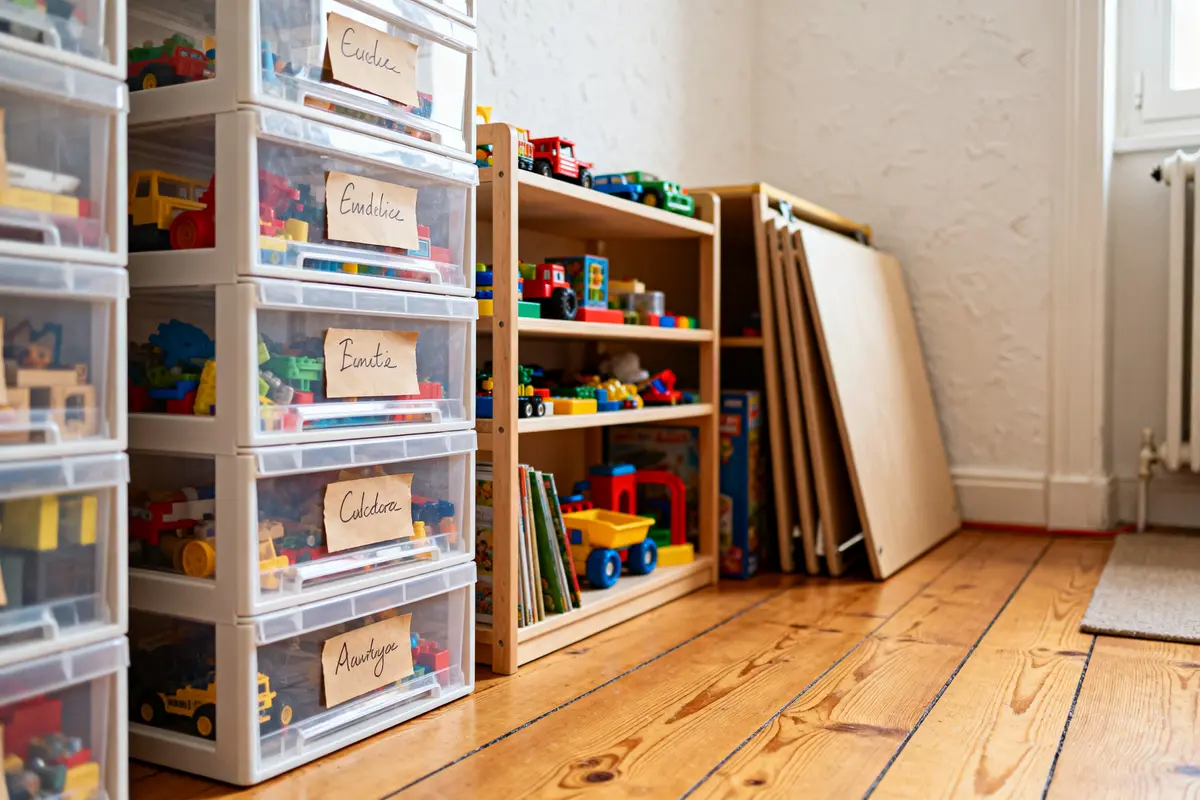
Consider using transparent containers as they allow quick identification of contents, saving time and avoiding unnecessary mess. For toddlers, adding visual or tactile labels on boxes helps promote autonomy by letting them know exactly where their toys belong even if they can’t read yet.
Clear plastic bins not only boost functionality but also integrate well across different interiors. Toy storage doesn’t have to mean an eyesore; there are plenty of creative, practical ideas to keep every room neat and cheerful.
Storing toys: compact solutions for small spaces
Limited space is a common challenge for parents who want to keep toys organized. Compact storage solutions like under-bed drawers or foldable fabric bins efficiently use areas often overlooked. Vertical shelving units also maximize floor space by stacking storage upwards.
Using stackable boxes makes the most of vertical height without crowding the room. Don’t forget that choosing containers with clear sides or windows helps to identify toys immediately without having to dig through multiple bins.
For very small spaces, wall-mounted organizers, like hanging nets or pocket holders, can accommodate plush toys or lightweight items, reducing clutter while keeping playthings within reach.
Room-by-room storage: boxes, bins and shelves
Store toys smart with Trofast and Kallax
IKEA’s Trofast and Kallax systems are beloved for storing toys across ages and rooms. Trofast’s modular frames paired with colorful storage boxes allow easy sorting and quick access, ideal in playrooms or kids’ bedrooms.
Kallax units offer versatility with options to add fabric cubes, drawers or doors, turning an open shelf into a personalized storage hub. Both systems can be rearranged to adapt to your child’s evolving needs.
Choosing transparent or lightly tinted boxes within these units is a smart move to allow quick visual sorting, a tip overlooked in many storage ideas online.
Rotation plans to store toys efficiently
Rotation is a simple but effective strategy for decluttering toy piles and keeping kids engaged. By cycling toys every 2 to 4 weeks, you reduce clutter and preserve novelty, making playtime more exciting.
Start by dividing toys into groups and store the non-active sets in labeled containers. Use easy-to-understand icons or textures on labels for non-readers to foster independence during cleanup.
This method lessens the chaos of overflowing boxes and helps parents maintain a clear overview of their kids’ collections.
Le mot de l’auteur
“Integrating clear, durable storage with thoughtful rotation schedules transforms toy management from chore to daily delight for the whole family.”
Decluttering and rotation to manage toy piles
Before organizing toys, sort through the collection to discard damaged or incomplete items. This process drastically reduces the volume and prevents frustration from lost pieces.
Applying the rotation system regularly, about every month, keeps storage manageable and playtime fresh. It’s also a nice chance to involve your children in decision-making, teaching responsibility and care.
Set aside a donation box for toys no longer played with to keep the storage lean and meaningful.
Multifunctional furniture: benches and modular systems
Furniture with dual functions like storage benches or modular shelving units adds value in small rooms. A bench with a toy box underneath combines seating with hidden storage, perfect for keeping clutter at bay.
Modular systems offer flexibility; you can add or remove cubes, bins, and shelves as your family’s needs evolve. Using lightweight, transparent boxes in such systems is advantageous for fast content recognition and tidying.
Opt for robust materials easy to clean and child-safe to ensure longevity and peace of mind. Consider padded lids to create cozy spots while keeping toys out of sight.
🧮 Toy Storage Space Calculator
Estimate the storage volume needed to organize your toy collection efficiently.
Decluttering and rotation to manage toy piles
Decluttering regularly helps keep toy piles under control. Make a habit of checking for old or broken toys, then donate or recycle those that no longer serve a purpose. This simple habit frees up valuable storage space and keeps the environment in mind as well.
Setting a clear rotation plan where toys are switched out every 2 to 4 weeks reignites interest and prevents boredom. Use containers with easy-to-read icons or tactile labels to make the process kid-friendly and straightforward.
Rotation not only reduces mess but also encourages kids to appreciate and take care of the toys they have.
Multifunctional furniture: benches and modular systems
Store toys smart with Trofast and Kallax
Combining functionality and style, IKEA’s Trofast and Kallax units offer clever storage adaptable to any room or age. Trofast frames with pull-out boxes keep toys categorized and accessible, perfect for busy households.
Kallax shelves can be customized with fabric boxes or doors, hiding clutter while offering a clean aesthetic. Transparent bins within these systems allow swift identification of toys, which helps maintain order effortlessly.
Rotation plans to store toys efficiently
Implementing a structured rotation plan is essential to avoid overwhelming clutter. Group toys and store inactive ones in clearly labeled containers. Switch toys every 3 to 4 weeks so children always have fresh options without adding more stuff.
To help non-reading kids, use distinct colors or textures on labels for simple recognition. This strategy increases engagement, reduces toy fatigue, and makes tidy-up routines smoother.
FAQ — storing toys
What are the best ways to store toys?
The best ways to store toys include using stylish baskets, modular systems like IKEA Trofast or Kallax, clear bins for easy identification, and adding tactile or visual labels for toddlers to promote autonomy and keep spaces organized.
How to store toys in small spaces?
To store toys in small spaces, use compact solutions such as under-bed drawers, foldable fabric bins, vertical shelving, stackable boxes, and wall-mounted organizers like hanging nets or pocket holders. These maximize space and keep toys accessible.
How to organize toys in the playroom?
Organize toys in the playroom using modular storage systems with colorful boxes for sorting and quick access. Transparent or tinted boxes help visual sorting, while rotation schemes ensure toys stay fresh and clutter is minimized over time.
How to manage toy clutter effectively?
Manage toy clutter effectively by regularly decluttering damaged or unused toys, implementing a rotation system every 2 to 4 weeks, and involving children in sorting with labeled containers. Donating unused toys also helps keep collections manageable.
What are some multifunctional furniture options for storing toys?
Multifunctional furniture options include storage benches that combine seating with hidden storage and modular shelving units like Trofast and Kallax. These systems use lightweight, transparent boxes for easy toy recognition and adaptability as needs evolve.
What are the advantages of using clear storage containers for toys?
Clear storage containers allow quick identification of toys without digging through bins, promote tidiness, and integrate well with different interior styles. They facilitate faster cleanup and support rotation plans by making contents visible at a glance.

Je suis Marie, créatrice de bougies artisanales derrière Candy Blue, que j’ai lancé en 2016. Je fabrique dans mon petit atelier des bougies décoratives et parfumées 100% végétales. Je m’intéresse également à d’autres activités créatives manuelles : peinture, décoration en tout genre, fabrication de bijoux, etc.